"Payback" is writer/director Brian Helgeland's homage to American crime films of the 70s. Our anti-hero, Porter, starts out being left for dead, so I suppose everything after that is technically an improvement.
#2 You probably don't spend as much time as I do thinking about how amazing Robert Ryan is, but you might, if you watched this movie. One of Ryan's specialities is a barely suppressed rage that's constantly in danger of erupting into violence.
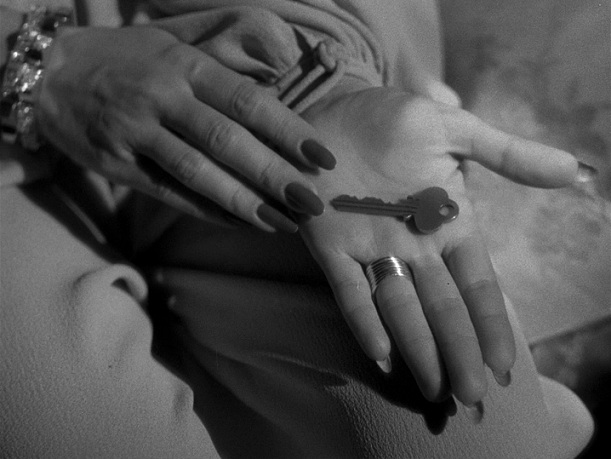
Lang is a master of mood and lighting (assisted by some fantastic cinematographers), and this carries "Secret." It doesn’t hurt that it stars Joan Bennett (a sometime Lang favorite) and Michael Redgrave, but the plot is so goofily Freudian that if Bennett and Redgrave weren’t adrift in Lang’s parallel universe, it probably wouldn’t work.
Lang's protagonists are often less involved in a plot than they are trapped in a psychologically overwrought context, an atmosphere rather than a real place. Even before we know what sort of trouble Neale will get himself in, there is an unnerving emphasis on the passing of time. The film opens on a clock.
To move away from his usual roles as a romantic lead, Power bought the rights to the novel in order to play its antihero, Stan Carlisle. The story begins and ends at a carnival sideshow, with characters musing about the show’s geek, a man brought so low that he bites the heads off chickens.
"Johnny Eager" (1941) is one of those movies that has a central heterosexual romantic relationship but in which the arguably more important relationship is the one between two male characters. Here, gangster Robert Taylor has Van Heflin at his side, as his best and only friend.
The opening of the film says it all: A two-shot of Tierney’s anxious, sweaty, and snarling Vincent Lubeck and his brother, Johnny, framed in—and divided by—the windshield of a car, as Johnny (Tierney’s real-life brother, Edward) drives his brother back to the city dump by which they grew up.