Alléluia was riveting in a demanding sort of way—so much so that the film sometimes felt like mostly a tight close-up on Dueñas's Gloria, sometimes just her eyes. (Though there was of course less of that than it seemed like there was.) It's based on the same story, the Martha Beck-Ray Fernandez murders, as the pulpy The Honeymoon Killers (1969).
Tativille looks suspiciously similar to our world but is plainly not. Each object, each line and curve has the potential to come to life at any moment. By the end of the film, no matter how much accidental destruction has taken place (a lot), you are likely wishing his world were the real world.
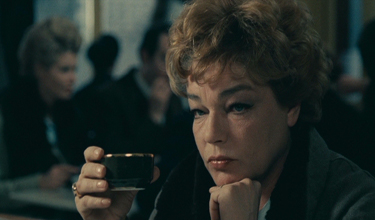
As much as Lino Ventura’s Gerbier grounds “Army of Shadows,” Simone Signoret is its heart, insofar as anyone is allowed a heart in the underground world of the French Resistance. She is, as her colleagues remark, a magnificent woman—among other things, she engineers two extraordinary escapes for her comrades.
Jean-Pierre Melville’s film about a small group of WWII Resistance fighters is undeniably a spy film. Yet it is strikingly unlike other spy films. Bursts of action happen only between long stretches of mostly silent waiting. The heroes make no perceptible progress against the enemy, managing little more than survival before inevitable betrayal and death.
This was Delon’s first big movie, and even if he weren’t very good, you can see why. But Delon is shockingly good. His Tom Ripley is a criminal novice. Much of the pleasure of both Highsmith’s first Ripley novel and of "Purple Noon" is watching Tom come into his own as a sociopath.