The film has a complicated history, including a frosty reception upon its first (and second release). But even if the film weren’t importantly historically, with one of the first moments of moving technicolor (rather than hand-tinted film), it allows us to watch Chaney in all his sympathetic, oddball glory.
On his best day, Peter Lorre's Dr. Gogol has at least one foot in la-la land. A refined madman, he's got Lorre's soft, soothing voice and self-effacing manner. Gogol is, however, equally likely to slip into hysterics at the drop of a hat.
Just a laboratory and a dream...and a lot of disemboweling. Udo Kier's Baron Frankenstein is a mad scientist by way of a porn film. Frankenstein, as portrayed by Kier, is the crazed cousin of Shelley's anti-hero, godfather to the grown-up children of "Spider Baby" (1967).
Alléluia was riveting in a demanding sort of way—so much so that the film sometimes felt like mostly a tight close-up on Dueñas's Gloria, sometimes just her eyes. (Though there was of course less of that than it seemed like there was.) It's based on the same story, the Martha Beck-Ray Fernandez murders, as the pulpy The Honeymoon Killers (1969).
The main character, the Peeping Tom of the title, is Mark Lewis (Karlheinz Böhm), a focus-puller (assistant cameraman) at a British film studio. But this is merely cover for Mark’s real calling—documentarian. The artistic child of a scientist, he documents the murders of women he commits using a dagger hidden in his camera’s tripod.
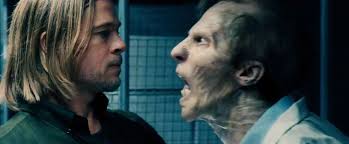
The Husband does not like zombie movies. Neither is The Husband a fan of apocalypse movies, though he’s perfectly happy reading Daniel Defoe’s A Journal of the Plague Year. Which is, let me assure you, much less action-packed than even the worst zombie movie.